BLACKWOOD Combat
Dives, takedowns, staged health, and guns that stay unique.
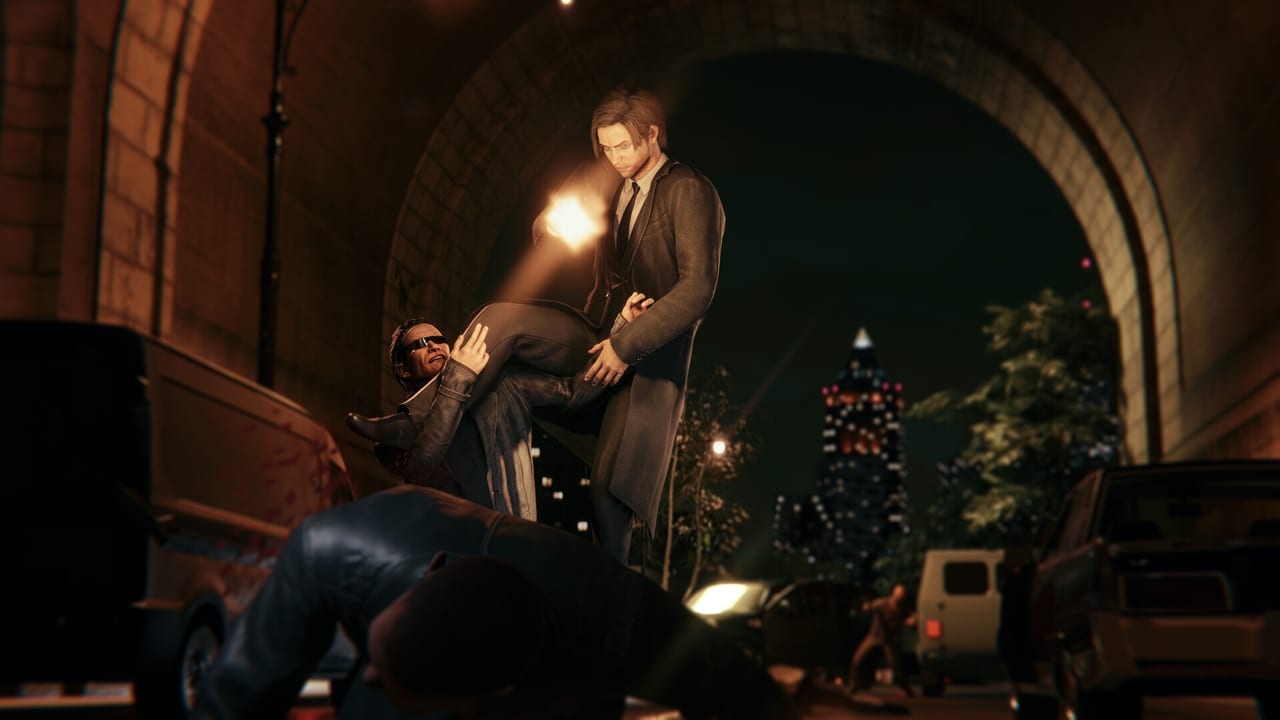
BLACKWOOD sells itself as gun-fu with weight, not a bullet-sponge cover shooter. Official language is consistent across the Steam page and developer deep dives: fast stylish gunplay, grounded melee, and a large set of contextual takedowns that use the room. This guide is the night half of the double life. For buttons and accessibility, use controls. For attachments and black-market parts, use weapon customization. For the money that buys those parts, stay honest with dual economy.
Gunplay and movement
Steam’s combat blurb is short on purpose: gunplay is fast, stylish, and unforgiving. Movement options listed in official copy are dives, rolls, and slides. Cover is visible in every public gameplay clip. The idea is cinematic without taking the gun out of your hands for a full QTE every time. You still aim, you still reload, and you still get punished for standing in a doorway as if it were a corridor shooter from 2012 — which is, fittingly, the year on the street signs.
Treat the first hours as a movement class. If you only hip-fire from cover, you will miss the identity of the game. If you only dive for style, you will eat staged health damage you cannot fully heal. The melee overview trailer is useful here: the team talks about hits that actually connect, camera shake, inverse kinematics, and a camera that helps sell impact. That is the design goal. Your job is to stop moving before the animation needs a target.
Contextual takedowns
The signature mechanic is takedowns. Official text says countless contextual finishers: one-on-one hand-to-hand and environmental executions. A developer deep dive adds a mechanical reason to use them: takedowns restore some health, so closing the gap is a recovery tool, not just a highlight. That pairs with staged health. You cannot treat a medkit as a full reset after every room. A clean takedown is how you claw a stage back when the gunfight went long.
Because takedowns are contextual, the room matters. Corners, ledges, vehicles, and tight interiors are not just set dressing. The prologue clip the studio showed — Anton coming up from sewers toward a night fight near Grand Army Plaza — is built as a chain of spaces, not an arena with a health crate. Learn to look for the next piece of geometry instead of reloading in the open.
Some special items purchased with Dirty Cash unlock unique takedowns. That is a wallet decision as much as a skill decision. Do not spend the legal rent on a finisher pack. See dual economy and builds.
Health stages, not a rubber band
Health is divided into stages. You cannot simply heal back completely after every fight. Combined with takedown healing, that pushes a rhythm: gunfight until the room is thin, crash in for a takedown, reset a stage, then move. Players coming from regenerative-cover shooters will overextend. Players coming from beat-em-ups will forget the gun is still the fastest way to delete a far target.
On the highest difficulty setting, the studio has been experimenting with hidden ammo counts. Anton physically checks the weapon when you need to know what is left. That is a tension toy and a reason to learn reload audio and magazine habits. It is also why this wiki will not publish a fake HUD diagram. Wait for the shipping options list, then update controls.
Weapons as unique objects
Every firearm you own is unique. You can keep multiple versions of the same gun built differently. Almost every weapon is modular. Compatible parts can move between guns. The black market sells military variants, illegal modifications, untraceable ammunition, and damaged weapons you can rebuild, strip, or sell. That is the entire argument for visiting weapon customization before you dump a beat-up rifle.
Civilian weapons sit on Clean Cash. They are the guns you can own without looking like a walking crime scene in the shop. Night hardware sits on Dirty Cash. A practical Act 1 habit: one civilian sidearm you trust, one modular night platform you keep feeding with parts. Spreading Dirty Cash across eight unfinished guns is how you arrive at a main mission with the wrong optic and no ammo.
Missions, modifiers, and practice
Main missions can be replayed at any time. Side missions return with modifiers such as tougher enemies, weapon restrictions, or time limits. Use replays to practice takedown timing and to farm Dirty Cash, but remember the calendar in Getting Started: sleeping still moves the month. A perfect combat loop that skips the DVD shop will still hit the 11–13k bill.
Adjustable difficulty is a listed Steam feature. Start lower if you are here for the story of Anton Blackwood and the shop scenes with Amelie. Turn it up when you want hidden ammo and less forgiveness. There is no public scoreboard requirement to play on the highest setting on night one.
A combat checklist that respects the rest of the game
- Warm up on movement: dive, roll, slide, then gun.
- Spend a takedown when a health stage drops, not only when a clip looks cool.
- Check compatible parts before you sell a damaged drop.
- Keep Clean Cash guns and Dirty Cash guns in separate mental tabs.
- After a loud night, schedule a shop morning so store management can refill the legal wallet.
Act 1 is still upcoming, so this page does not list boss names or pretend a full enemy codex exists. When the campaign is live, we will add encounter notes under this same URL and link them from the Guides hub. Until then, the melee trailer on this page plus the official gameplay clip on Getting Started are the honest footage.
Frequently Asked Questions
Quick answers to the most common questions.
Do takedowns heal you?
Developer commentary says takedowns restore some health. Health is still split into stages, so a finisher is a partial recovery, not a full reset.
Is BLACKWOOD only guns or only melee?
Both. Official copy stresses gunplay with dives, rolls, and slides, plus grounded melee and contextual takedowns. The melee trailer on this page is the close-range half.
Why hide the ammo count?
On the highest difficulty the studio has tested a mode where Anton must physically check the weapon. Confirm the shipping options in controls after launch.
Should I sell damaged guns?
Not before you check parts. Damaged weapons can be rebuilt, stripped, or sold. See weapon customization.